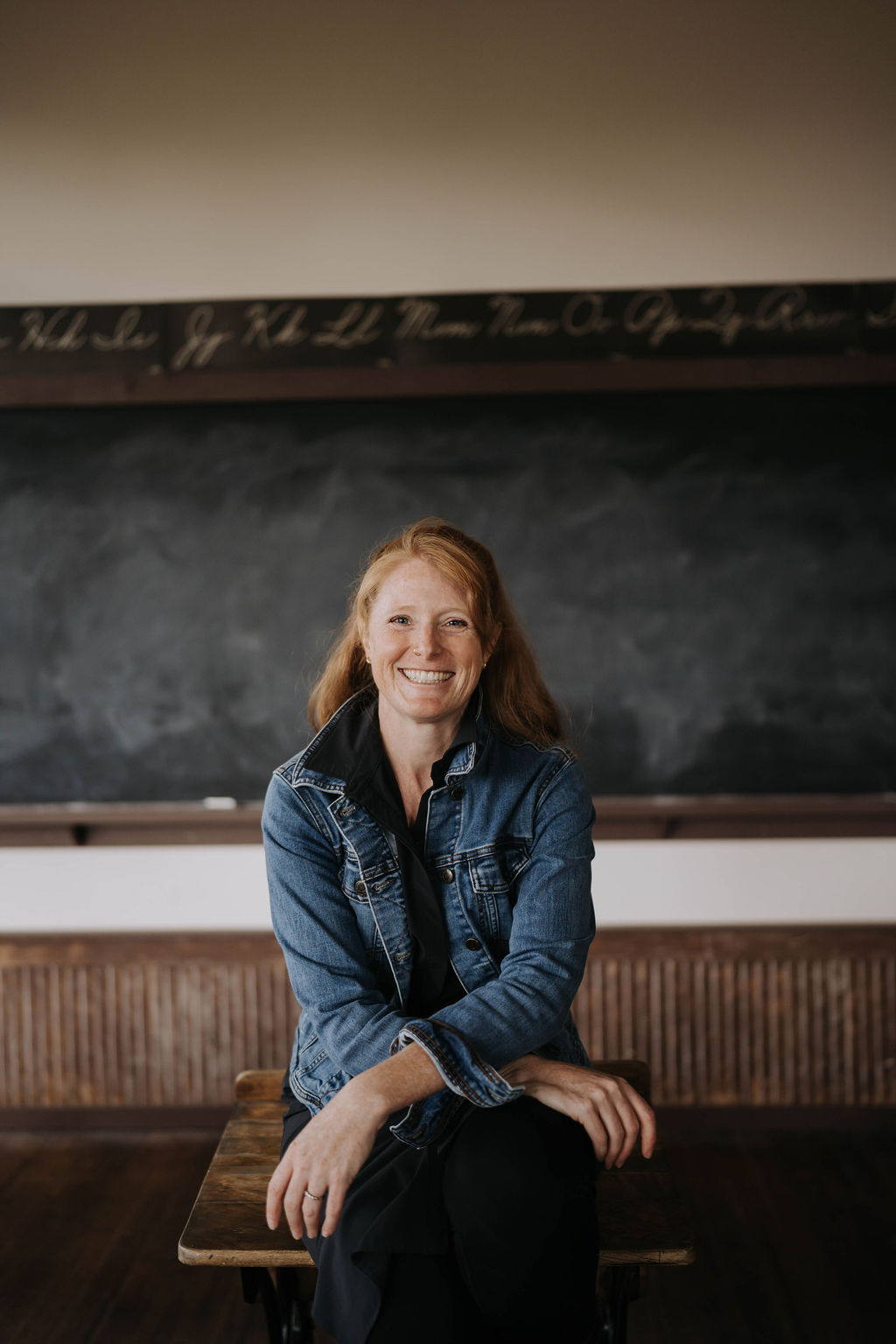
I have never once felt confident in a new title the moment I earned it. Not as a mother. Not as a kayak guide, standing in front of a group of strangers responsible for their safety on the water. Not as an educator, standing in front of students for the first time. Confidence did not come first in any of those roles. I had to take the leap, own the title before I felt ready for it, and let the confidence catch up afterward. That order, action before confidence, feels completely backwards, and it is also how almost every real transition actually works.
If you are sitting with the feeling that you are a fraud for calling yourself an educator, I want you to hear this clearly. That feeling is not a signal that you are unqualified. It is a signal that you are doing something new, and newness is uncomfortable by design.
Why Do I Feel Like a Fraud Calling Myself an Educator?
Because you are asking yourself to hold a title before you have accumulated the evidence that usually makes a title feel earned. This is not unique to teaching. It happens with every identity shift I have ever gone through. You cannot build years of experience in a role before you start the role. The experience only comes after you begin, which means the discomfort of feeling unqualified is not optional. It is simply the price of admission for doing something you have not done before.
The mistake most people make is treating that discomfort as information about their actual competence. It is not. It is information about the fact that they are early in a process, and being early is not the same thing as being unqualified.
What if People Find Out I'm Not the Biggest Expert in My Field?
Here is something worth sitting with. You do not need to be the biggest expert in your field to be a genuinely effective educator. You need to know more than the person you are teaching, and you need to care enough about their outcome to guide them well. Those two things, real knowledge and real care, are what your students are actually looking for. They are not auditioning you against every other expert in your industry. They are asking whether you can help them get from where they are to where they want to be.
The fear of being found out tends to grow in isolation, in the quiet moments before you have actually started teaching, when the only voice in the room is the one questioning whether you belong there. That fear almost always shrinks once you are actually in front of a student, because the work itself gives you something the fear cannot, real evidence that you are capable of helping someone.
Do I Have to Be an Expert in Everything I Teach?
No, and expecting that of yourself is a setup for permanent hesitation. You are not required to have mastered every adjacent topic before you teach the thing you actually know well. Depth in your specific area is what your students need from you. Trying to be an expert in everything before you allow yourself to teach anything is a way of never starting at all.
How Do You Overcome Imposter Syndrome as a New Teacher or Course Creator?
You overcome it the same way I have overcome it every time it has shown up in my own life, by owning the title before you feel fully ready for it. This is uncomfortable, and it is also the only path that actually works. Waiting until the discomfort disappears means waiting forever, because the discomfort is tied to the newness of the role, not to your actual ability to do it well.
There is a version of this worth naming directly. Beginners spend far more time and energy on the work than experts do, and that inefficiency gets mistaken for a lack of qualification. It is not. Experts have the advantage of repetition. They know exactly where to spend their energy because they have done the thing hundreds of times before. Beginners have not built that intuition yet, so everything takes longer and requires more deliberate effort.
- The extra effort a beginner spends is not evidence of inadequacy, it is evidence of doing something new correctly
- Streamlining comes later, after repetition, not before you begin
- Every expert you admire was once spending far more energy on their craft than they do now
We All Start Somewhere
There is nothing wrong with being at the beginning of something. I want to say that plainly, because the feeling of imposter syndrome tends to convince people that starting from a place of uncertainty means they are doing it wrong. They are not. Everyone who now teaches with confidence once stood exactly where you are standing, questioning whether they had any right to call themselves an educator.
The right you are looking for is not granted by a credential or a feeling of readiness. It is claimed by showing up, doing the work of guiding another person's learning, and letting the confidence build from the evidence that follows. It always follows. It just never comes first.
What Owning the Title Makes Possible
When you stop waiting for confidence to arrive before you begin, you make room for the actual impact you are capable of creating. Every person has something to teach, and the world does not benefit from you holding that back until the discomfort disappears. Own the title. Let the confidence catch up. That is the honest, counterintuitive, entirely normal path that every educator before you has walked as well.